
The intersection of multiculturalism and music
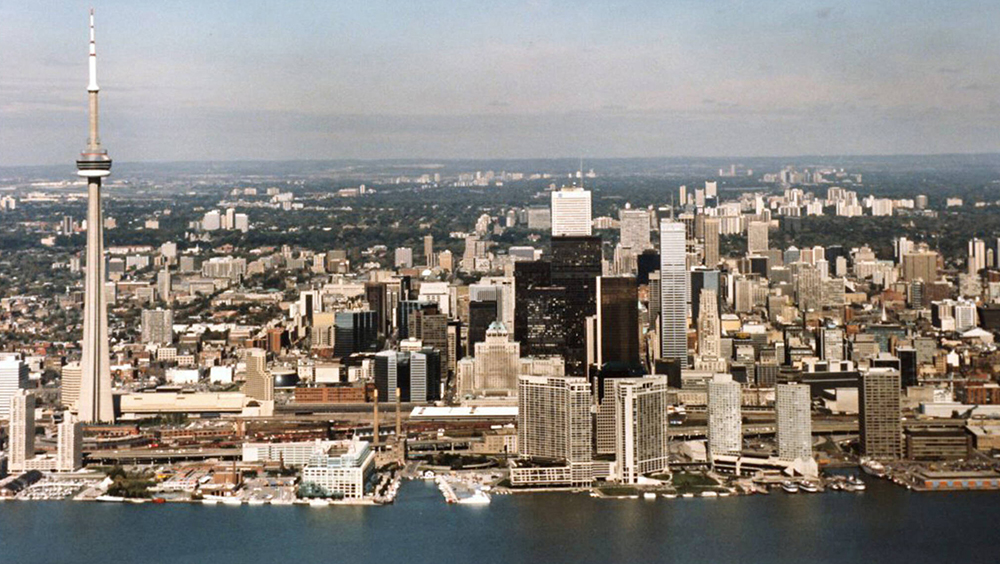
House Music came to life in the late eighties in US cities like New York, Chicago and Detroit. Born from the ashes of Disco, House had its own unique sound. A mixture of thumping drum beats and soulful vocals. A unique blend of jazz, RnB and Gospel sounds. The opposite side of the coin of another emerging music movement called Hip Hop. Both playing influential roles. House Music was for the underground. It cried out for racial unity and equality, attributes that were lacking in these American cities. North of the border, was Toronto. The most multi-cultural city in the world. It’s proximity and cultural makeup served as the ideal conditions for House Music to thrive.
Vacancies to be filled
At the time, there was also an abundance of vacant downtown warehouses and a low crime rate comparative to our neighbours from the South. Promoters and DJs could pull together a warehouse party in a relatively short period of time. These late-night events secretly dominated Toronto Night Life well into the wee hours while the rest of the city slept.
House takes root in Toronto
American DJs and House Music Performers began to make Toronto a tour stop. This brought in House Music tourism from America and along with it the latest underground club music that was emerging there. Influential Toronto DJs began to make a name for themselves. Soon, Americans were talking about Toronto.
At the same time, House Music was also growing into a phenomenon in the UK and across Europe. Here in Canada’s largest city, English House Music took hold and blended with American and Canadian influences. Along with it, international fashion club trends began to appear all across the GTA.
Supported to thrive
Long before main stream radio took notice, college radio stations in Toronto (CIUT, CKLN etc.…) dominated the weekend airwaves at the tail end of the dial. They brought the latest dance music to this niche audience via specialty record stores like Play De Record, Cosmos Records and Sam the Record Man. Collectors and DJs drove the market, but it was the dancers that drove the movement. This eclectic and inclusive community built the foundation for what serves as the creative lifeblood that surges through Toronto to this day.
The Golden Age of House
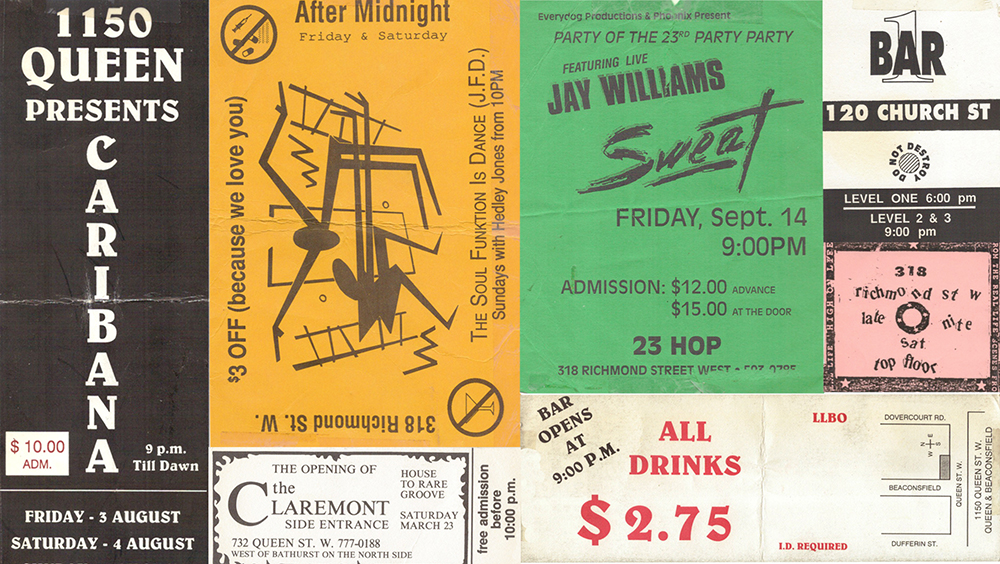
Each week, Promoters found new and exciting locations within the city to keep House alive. With so many warehouses in the city standing vacant, promoters found an opportunity to fill them (with a cover charge). These events also channeled money into the City’s underground economy. Local equipment rentals, printing and event employment all benefited from these “warehouse parties”. Hardwood floored spaces with tall windows and a view of city. The perfect backdrop for House to take root. This positive movement was allowed to thrive here. Over time, the number of House Music Fans in Toronto grew significantly.
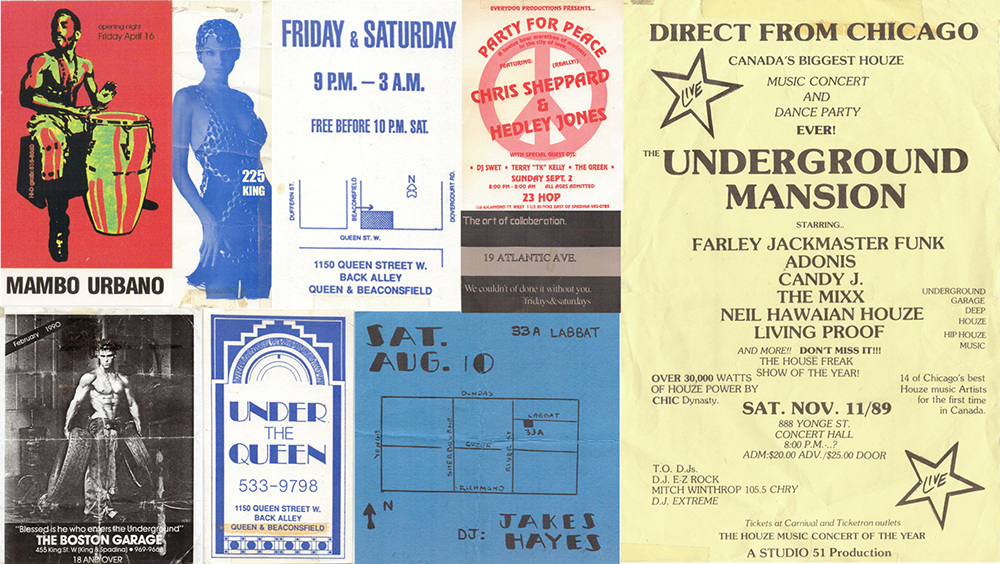
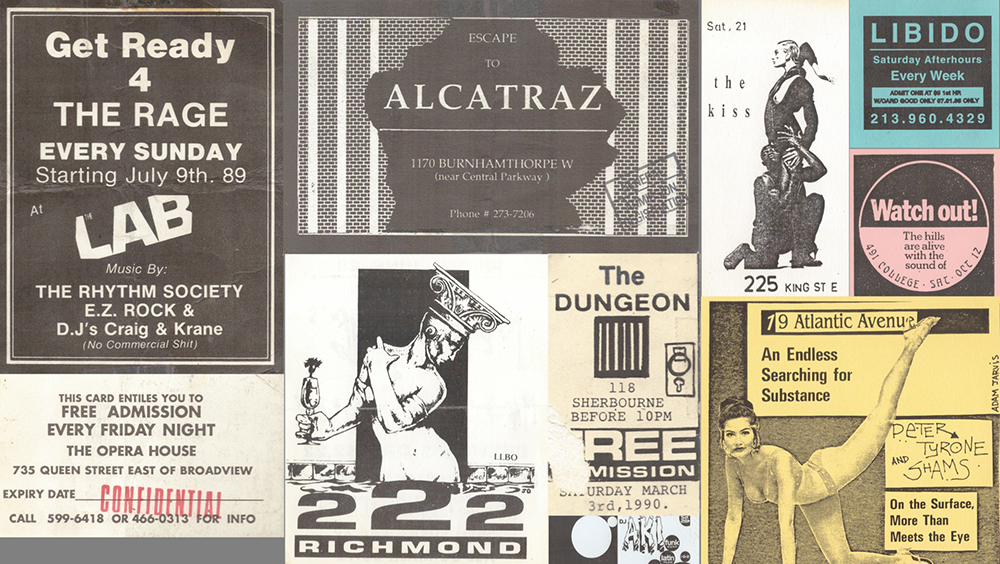
Promoting these parties soon became very competitive. Each event required creative flyers to lead House Music lovers in the right direction. Pre-dating Photoshoshop, these hand drawn, manually typeset creations were often mass produced on photocopy machines and handed out by hand one at a time. These creations served as the base for a style of graphic design that is uniquely Torontonian and recognizable today.
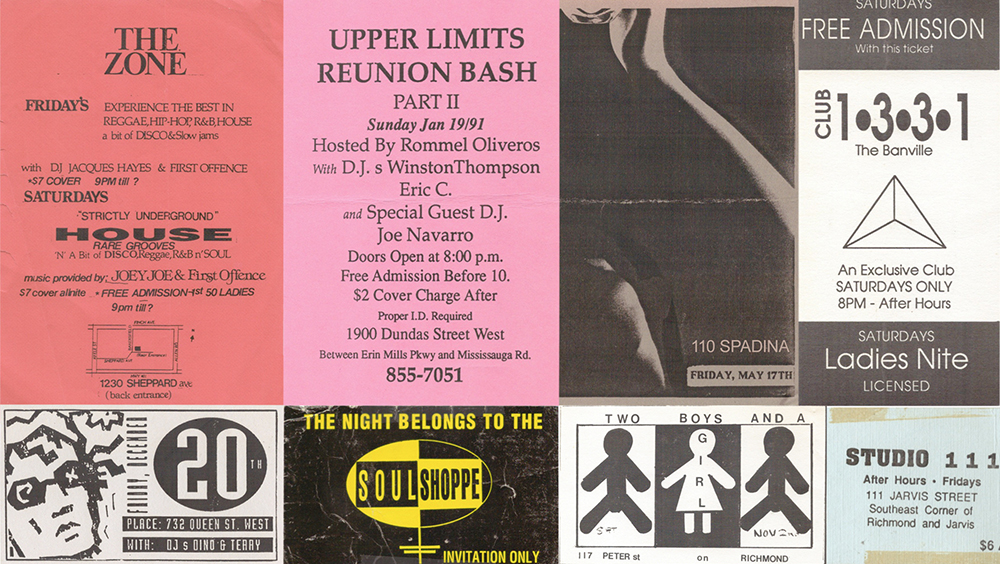
Embraced by Toronto – Seen across Canada
Eventually, House Music caught the attention of Canadian media giant Muchmusic, and along with their media counterparts and local CityTV, House Music suddenly gained national exposure. Something that even the Americans and Europeans were in awe of. Shows like Fashion Television (FT) brought in the latest European fashions, while shows like Electric Circus and the New Music delved into the stories behind the music. Toronto was at a cultural vertex.
Reminisce was established in 1999
This incredible creative chapter went from about 1986 – 1993. After it died out, The brand Reminisce was established *(March 1999) at an event hosted by Vera babic and Adam Jarvis at the Octopus Club.
All of the music was drawn from the golden age of House Music (pre – 1990). As this event moved, each of the venues had art installations that included vintage photography and famous quotes from that time period. In total, we produced approximately 2 events per year for a total of 10. Concluding our run at the legendary Una Mas on King St. West. We photographed and archived each event to crystalize the importance of this era and our role in it.
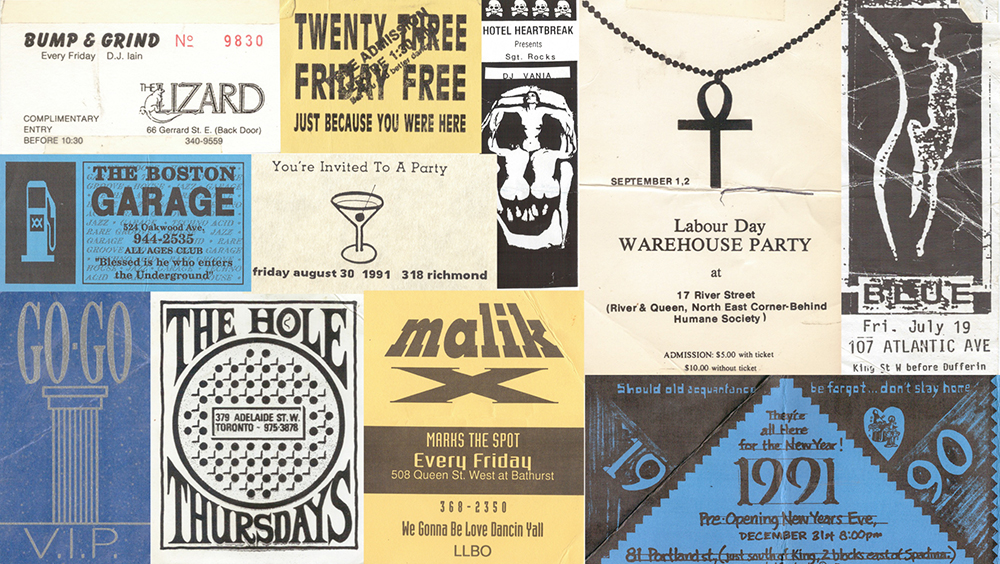
Remember the Future
I always knew in my heart how special it was to witness the birth of House Music here in Toronto. It shaped me, and in many ways has led me back to tell this tale. Not only for myself, but for the entire generation of Torontonians who were also touched by it. The story of House needs a Canadian footnote. I volunteer for the task.